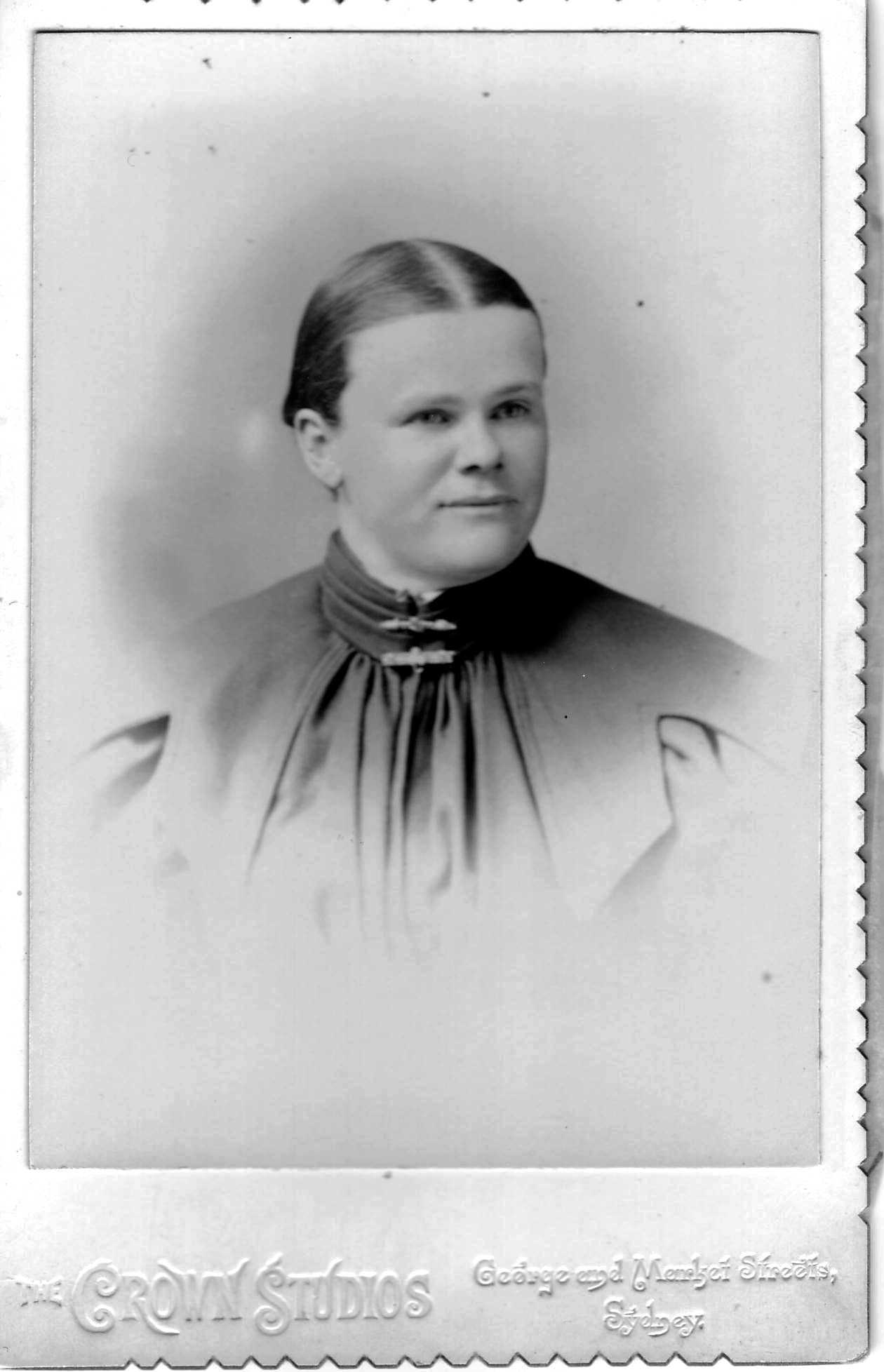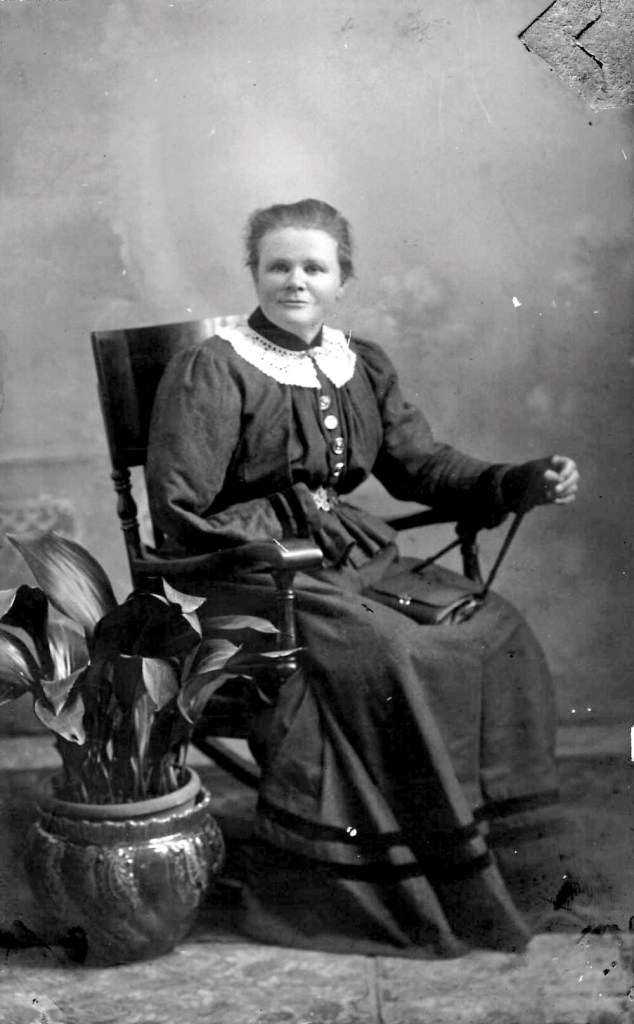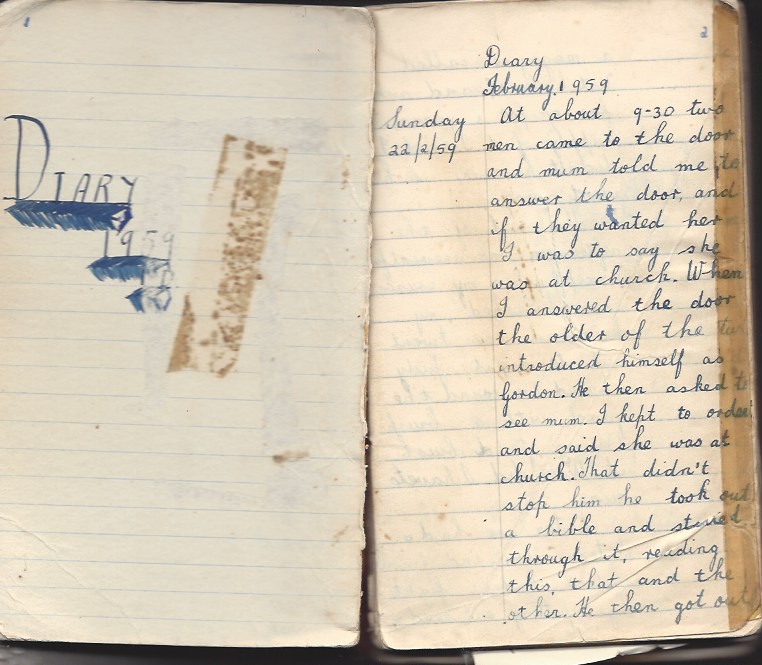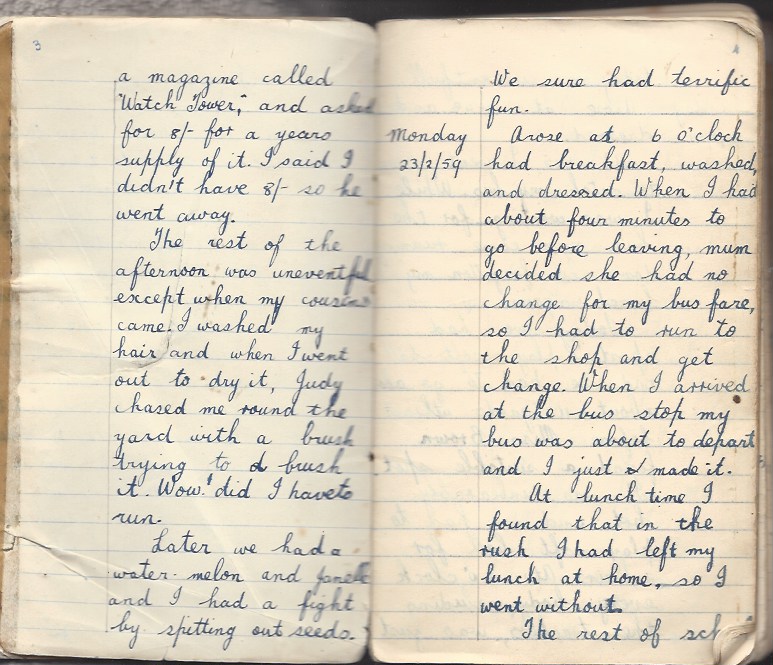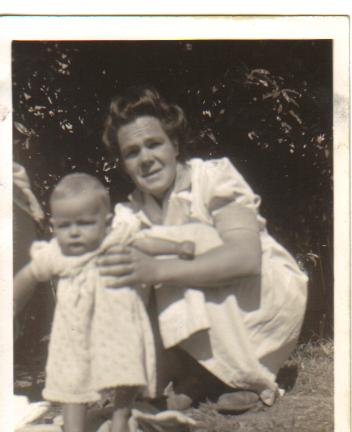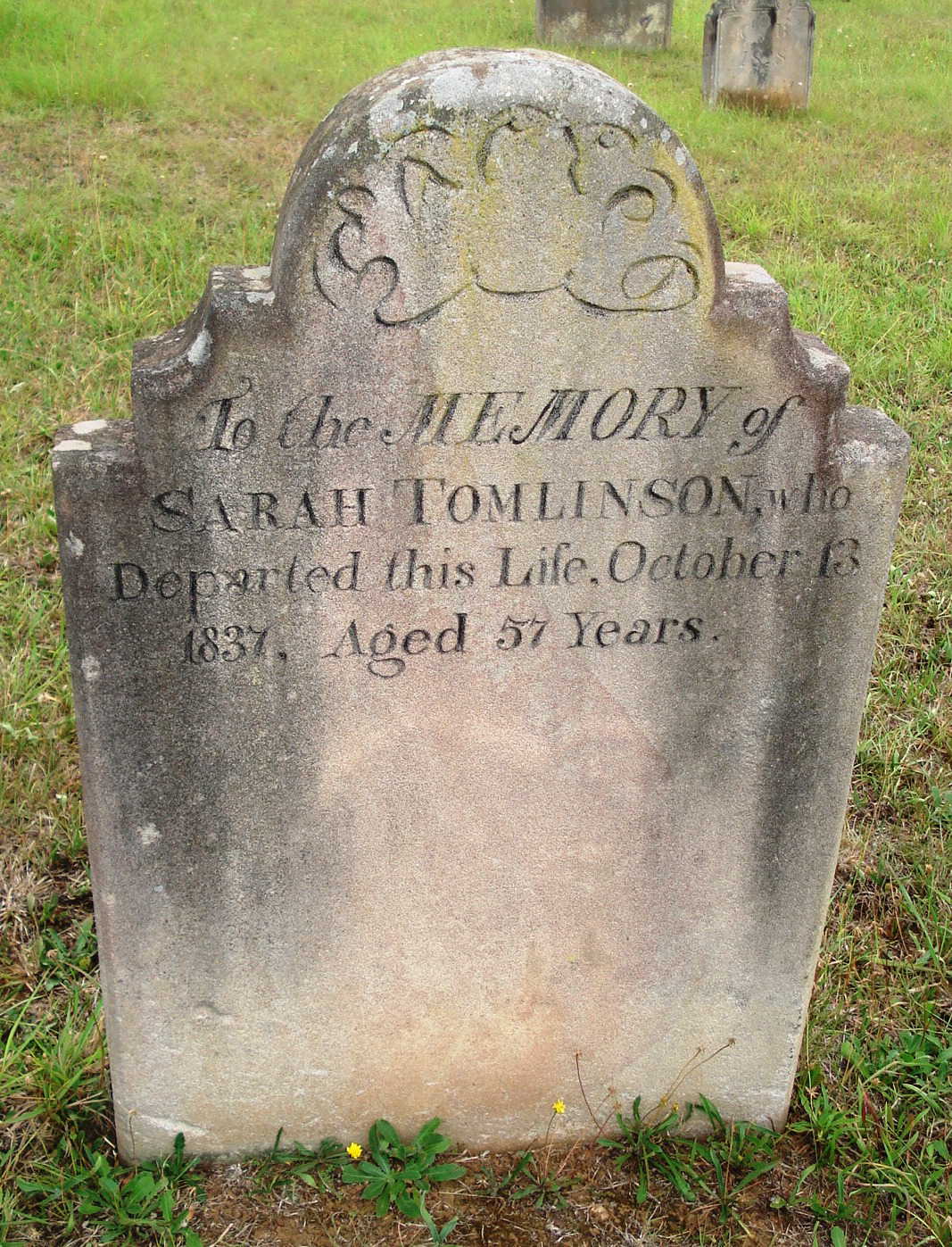
Sarah Tomlinson (nee Lester) 4X Great Grandmother

Sarah’s Journey

FROM THE SLUMS OF BRISTOL TO A NEW LIFE IN AUSTRALIA

Sarah Lester was most likely born in the slums of Bristol, in 1779.  She became a young felon on the streets of London; detained and tried twice at the old Bailey. Her life changed dramatically following transportation from London to Port Jackson, aboard HMS ‘Glatton’, to the challenges, hardships and opportunities to be experienced in her new homeland

Details about her age vary from the Old Bailey Trials[1] to the New South Wales Convict Musters[2]. It would seem that not even Sarah was sure about her age. In 1837 on her head stone, her age is 57 years, making her birth year 1880.  
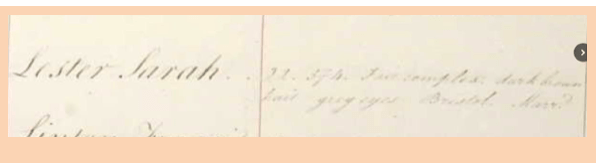
She was unlikely to have married, as was suggested above. There are no records available of a marriage between a female named  ‘Sarah’ and a male named ‘Lester’ within an appropriate time frame in the Bristol area or further afield.

1779 – 1800 Early Days in Bristol 

During Sarah’s early life in Bristol, there was social unrest in the city. Rising food costs and industrialisation of the weaving industry led to riots in the streets. The population of Bristol had increased rapidly from about 25,000 in 1700 to 68,000 in 1801[3]. Another aspect was the imposition of Turnpikes and bridge tolls.   Notably in 1793 the Bristol Bridge Riot left 11 people killed and 45 injured. [4]At some time during her late teens to early twenties, Sarah moved from Bristol to London.

1801 Trials and Tribulations 

By 1801, Sarah was employed as a Servant to publican, James Tims and his wife, Ann, in their ‘dwelling house’ in London.  In early April, Sarah left the Tims’ without giving any notice.  Soon after, on 4 April, Mrs Tims discovered that her cloak and two yards of cotton were missing from a locked box. The items were later located at the pawnbroker, Thomas Brown’s shop.  Sarah found herself before Lord Chief Baron at Middlesex on April 15th[5].    In her defense, she claimed  “I did not steal these things; I picked them up”.   She was found guilty and sentenced to death.  Fortunately she was pardoned from the death sentence.[6]
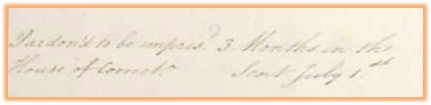
On 1st July, she was committed to the Tothill Fields Prison[7] in Westminster, often referred to as ‘Bridewell’. The building originally was King Henry VIII’s ‘Bridewell Palace’.  Conditions in Tothill Fields Prison were said to be less harsh than other establishments, and prisoners were given access to medical care. [8]

During her three months incarceration it is unlikely that Sarah was harshly treated or punished. At the end of her sentence in early October, she was cast out onto the streets possibly without ongoing support or shelter.  

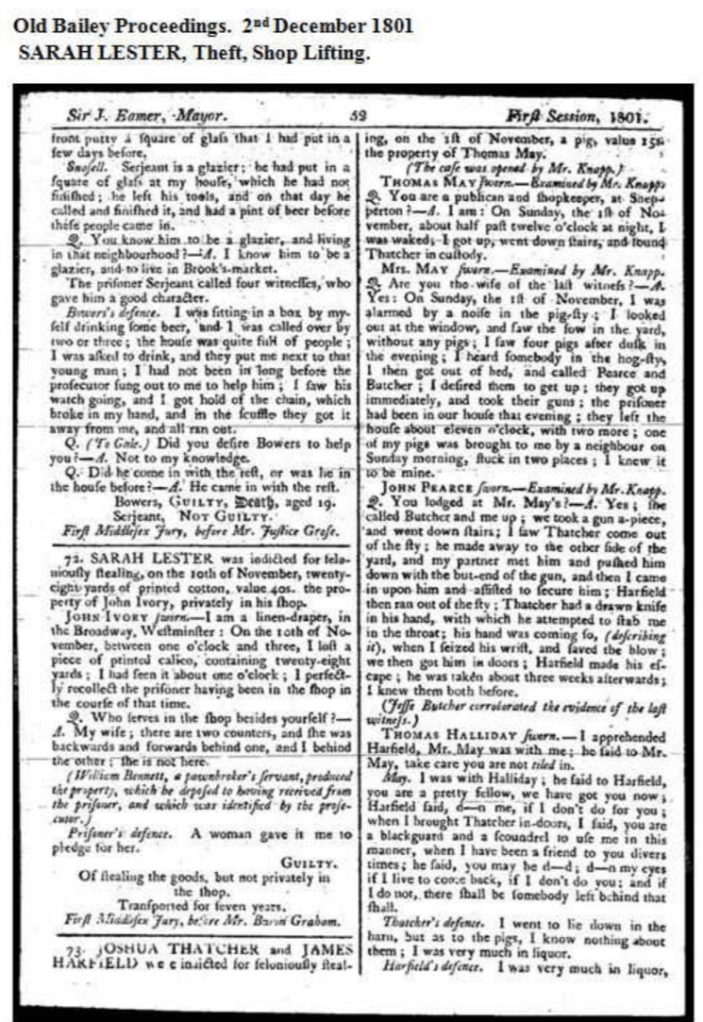
In less than two months, on 26th November, she was again committed to Tothill Fields, charged with feloniously stealing 28 yards of printed cotton from the Drapery shop of John Ivory in the Broadway. [9] The Broadway is not far from where she had so recently been released.
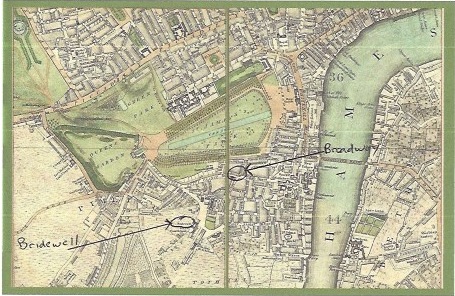
Figure 3  Cary’s New and Accurate Plan of London and Westminster 1795 mapco.net/london

In her defence to Mr Baron Graham at her trial on 22 December, Sarah claimed “A woman gave it me to pledge for her.” [10]She was found guilty “of stealing the goods, but not privately in the shop” and sentenced to be transported for seven years. 
1802 Transportation 

On 6th September 1802 Sarah was delivered from the Tothill Fields Prison to ‘HMS Glatton’, along with 270 male and 134 female convicts, and about 30 Free Settlers. They departed from England on 23 September and sailed via Rio de Janeiro to Port Jackson. During the voyage 7 male convicts and 5 females died.

On 19 March 1803, it was reported that  “the day before she (Glatton) got into the Cove 100 weak people were taken out and put on board the Supply, … their complaints were slightly scorbutic…”. [11] I cannot find any records of Sarah being amongst those passengers. It would appear that she arrived in the colony in a reasonably healthy condition.

1803-1806 Early Life in the Colony

It is likely that soon after stepping foot in the Colony, Sarah was sent to the Parramatta Female Factory beside the Parramatta River. The first record of her, the 1806 Muster, records ‘Sarah ‘Lister’ from the Glatton, a prisoner, employed at the factory at Parramatta.’ [12]

1806-1837 Family Life and Beyond

On 15 May in that year her first daughter, Ann Tomlinson was born in Parramatta. [13] The father, Robert, was a convict who had arrived on the ‘Canada’ in 1801. His sentence had expired in1802[14].  He was employed by the Government as a file cutter, and paid a salary of £15.0.0 a quarter from the police fund. [15]

I cannot find any record of permission being granted for the couple to marry; or of the couple having ever married. Sarah and Robert had another two daughters, Phoebe[16], born and died in 1807, and my three times great grandmother, Phebe[17](known as Phoebe) born on 10 July 1809. Both Phebe and Ann were baptised at Saint John’s Church, Parramatta, on Christmas Eve, 1809.  
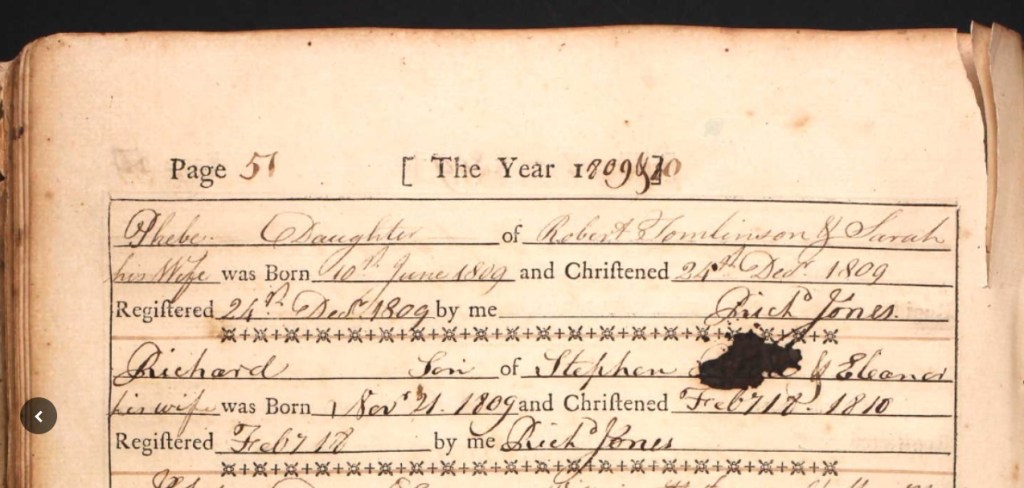
Figure 4 St John’s Parramatta, Baptisms 1809, Phebe Tomlinson

On 1st January 1810, Governor Lachlan Macquarie granted Robert a lease of 14 acres of land in Parramatta for which he paid 11/3d.[18]
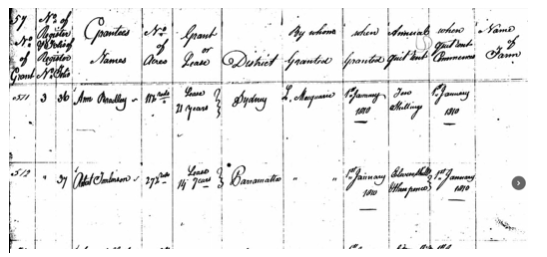
Figure 5 Copy of Grant of Lease to Robert Tomlinson

There are no Criminal records for Sarah in the Colony, and she was granted a Pardon 1811[19].  The couple settled down into a life dedicated to making a secure home for their family, with hard work and commitment to their community.

In an obituary to Ann Mobbs (Tomlinson), memories of her father living in a cottage in what was later known as Parramatta Park are mentioned. [20]  It is likely that this was the allotment granted to him in 1810. 
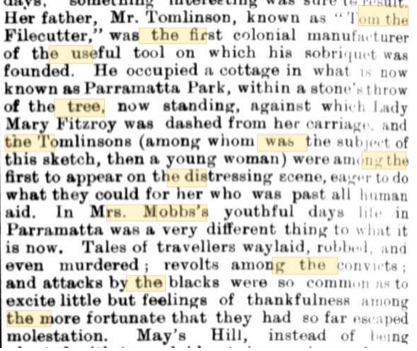
Figure 6 “The Late Mrs Mobbs”

Ann also reflected on tales of “travellers waylaid, robbed and even murdered; revolts among the convicts;  and attacks by the blacks were so common as to excite little but feelings of thankfulness amongst the more fortunate that they had so far escaped molestation.”    Sarah must have seen and experienced many challenging and frightening events raising her family in Parramatta.

Sarah’s journey ended with her death on October 13th 1837.  She is buried in the St John’s Cemetery, Parramatta.

Bibliography

Bateson, Charles, ‘The Convict Ships 1787 – 1868’ Library of Australian History, Sydney, NSW. 1983.

London Lives 1690-1800 – Crime, Poverty and Social Policy in the Metropolis, ‘Bridewell Prison and Hospital’ https://www.londonlives.org/static/Bridewell.jsp , Accessed 17 May 2018-05-29

Jones, Philip D. (1980). ”The Bristol Bridge Riot and its Antecedents: Eighteenth-Century Perception of the Crowd”. Journal of British Studies, 19(2), 74-92. Doi:10.1086/385756. Accessed 17 May 2018

Mapco, Map and Plan Collection Online, London and Environs Maps and Views, http://mapco.net/london.htm. Accessed 23 May 2018. 

Old Bailey Proceedings Online (www.oldbaileyonline.org.version 6.0, 17 April 2011), April 1801 trial of Sarah Lester  (t18010415-75) Accessed 20th May 2018

‘Old and New London: Volume 4, Westminster”, Tothill Fields and neighbourhood Pages 14-26 Originally published by Cassel, Petter and Galpinm London, 1878, available at: http://www.british-history.ac.uk/old-new-london/vol4/pp14-26,  Accessed 17 May 2018.

Old Bailey Proceedings Online (www.oldbaileyonline.org.version 6.0, 17 April 2011), December 1801 trial of Sarah Lester (t18011202-72),  Accessed 20th May 2018.

Parramatta Heritage Centre, ‘The First Female Factory, Prince Alfred Square, 1803-1821’, 12 August 2015, (http://arc.parracity.nsw.gov.au/blog/2015/08/12/the-first-female-factory-prince-alfred-square-1803-1821/ ) Accessed 9 May 2

The Digital Panopticon Sarah Lester , Life Archive ID obpt18011202-72-defend617 (https://www.digitalpanopticon.org/life?id=obpt18011202-72-defend617, Accessed 28th May 2018.

‘The Late Mrs Mobbs’, Australian Town and Country Journal, (Sydney, NSW: 1870-1907) 27 December 1890,  Available on Trove, https://trove.nla.gov.au, Accessed 27 May 2018.

1811-1870 New South Wales, Australia, Land Records, Ancestry, Accessed 19 May 2018Acces.

‘1806–1849 New South Wales and Tasmania, Australia Convict Musters, Ancestry, Accessed 18 May 2018.

 ‘1790-1849 New South Wales, Australia Convict Ship Muster Rolls and Related Records’, Ancestry, Accessed 21 May 2018.

‘1788-1842 Australia, List of Convicts with Particulars’, Ancestry, Accessed 18 May 2018. 

1791-1867 Australia Convict conditional and absolute pardons, Findymypast,  Accessed22 May 2018.

1792-1981 Australia, Births and Baptisms, Ancestry, Accessed 21 May 2018.


[1] Old Bailey Proceedings Online, Trials of Sarah Lester,  (t18010415-75), (t18011202-72) Accessed 20 May 2018. 

[2] Ancestry, Muster Records for Sarah Lester, ‘New South Wales and Tasmania, Australia Convict Musters, 1806-1849’, Home Office: Settlers and Convicts, New South Wales and Tasmania, National Archives, Kew, Surrey, England , Accessed 18 May 2018.

[3] Localhistories, ‘A Brief History of Bristol, England’, Accessed 17 May 2018.

[4] Journal of British Studies, ‘The Bristol Bridge Riot and Its Antecedents: Eighteenth-Century Perception of the Crowd’, Philip D. Jones, http://lydia.bradley.edu/academics/las/civ/bristol, accessed 17 May 2018

[5] Old Bailey Proceedings Online, Trials of Sarah Lester. 

[6]The Digital Panopticon Sarah Lester, ‘Life Archive ID obpt18010415-75-defend816’ (https://www.digitalpanopticon.org/life?id=obpt18010415-75-defend816 , Accessed 27th May 2018).

[7] Britishhistory, ‘The City of Westminster, Introduction’, Old and New London: Volume 4 (1878), Accessed 17 May 2018.

[8] Londonlives, ‘Bridewell Prison and Hospital’, https://www.londonlives.org/static/Bridewell.jsp, Accessed 17 May 2018

[9] Ancestry, England and Wales, Criminal Registers, 1791-1892 for Sarah Lester, Home Office: Criminal Registers, Middlesex HO 26; Piece 8; Page: 78, Accessed  20 May 2018.

[10] Old Bailey Proceedings online, Trials of Sarah Lester .

 [11] ‘Ship News’, The Sydney Gazette and New South Wales Advertiser, 19 March 1803. P. 3.

[12]  Ancestry, Muster Record for Sarah ‘Lister’.

[13] Findmypast, Birth Transcription for Ann Tomlinson. ‘New South Wales Births’,  Accessed 21 May 2018. 

[14]  Ancestry, Muster Record for Robert Tomlinson, ‘State Records Authority of New South Wales; Kingswood, New South Wales, Australia; Title: Muster of Prisoners in the Colony, 1810-1820; Volume: 4/1237’ Accessed 28 May 2018

[15] Ancestry, Salary Robert Tomlinson, ‘New South Wales, Australia, Colonial Secretary’s Papers, 1788-1856, Special Bundles, 1794-1825’,  NRS 898; Reels 6020-6040; Fiche 3260-3312, Accessed 27 May 2018.

[16] Findmypast, Birth Transcription for Phoebe Tomlinson,(New South Wales Deaths 1788-1945 Transcription V18072152 2A), Accessed 21 May 2018.

[17] Ancestry, ‘Birth Index, 1788-1922 New South Wales, Australia’, (Phebe Tomlinson) V1809604 148, Accessed 21 May 2018.

[18]  Ancestry, Land Grant for Robert Tomlinson, ‘New South Wales, Australia, Registers of Land Grants and Leases 1792 – 1867’,  Accessed 30 May 2018.  

[19] Findmypast, Australia,  Absolute Pardon for Sarah Lester, ‘Convict Conditional and Absolute Pardons’, 1791-1867, Accessed 21 May 2018.

[20] ‘The Late Mrs Mobbs” ‘Australian Town and Country Journal (Sydney. NSW)’, 27 December 1890 Page 32, Accessed 22 May 2018.

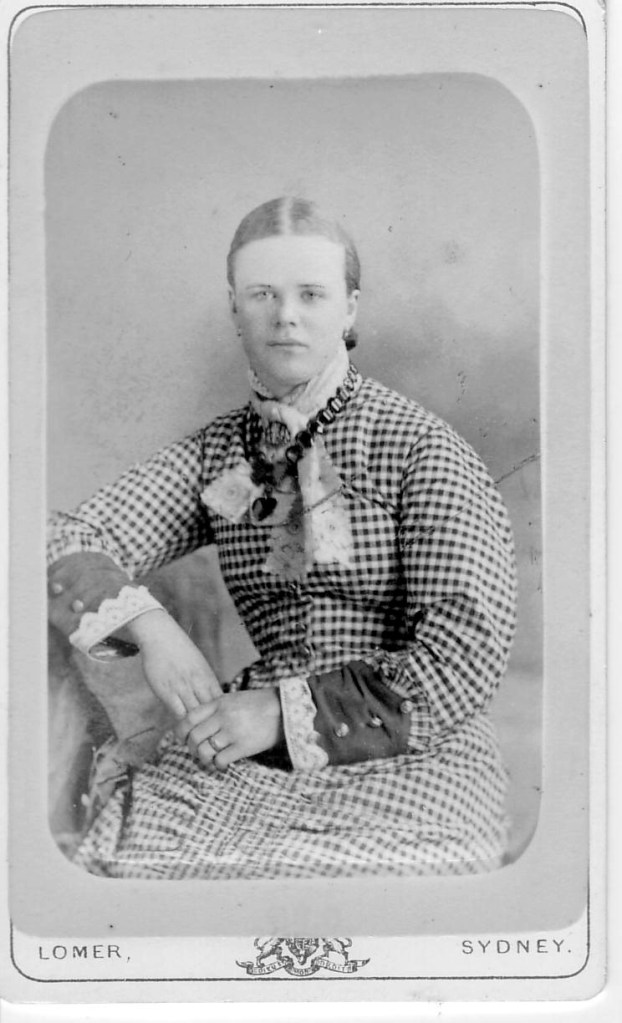
Maryann Leake (nee Bampton)

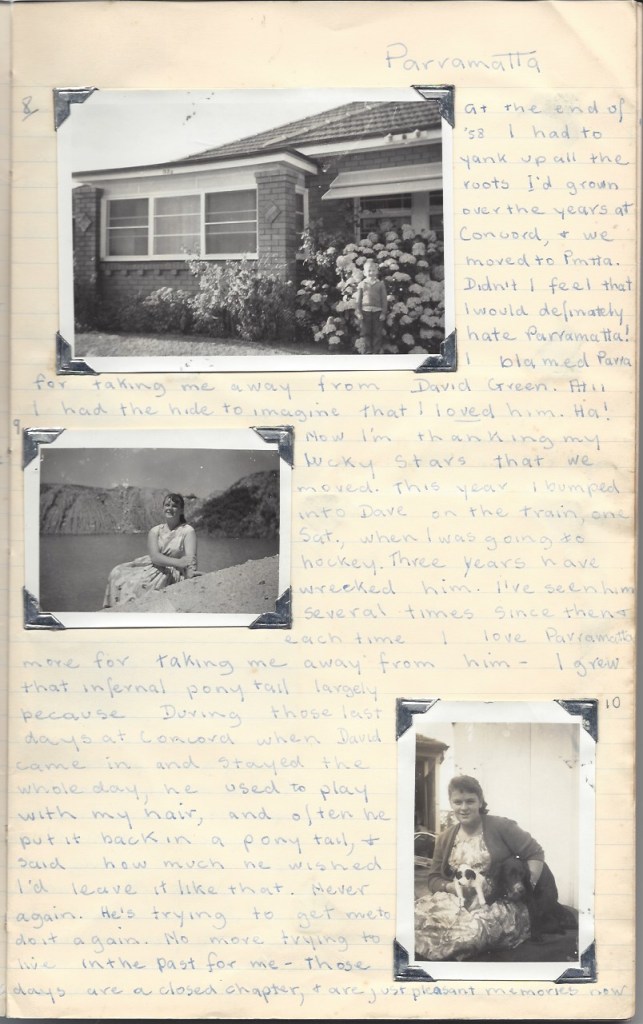
This photo of my Great Grandmother, Mary Ann Leake (nee Bampton) must have been taken upon her marriage to my Great Grandfather, David Leake because I notice that she is wearing a shiny new wedding ring.

I think that she and David must have lived near each other possibly in Shiffnal, Shropshire England, until David emigrated to the United States with his parents in 1871.   Following the tragic death of his father in a mining accident in 1874, David returned to England where it is likely that he courted Mary Ann.  At the age of 21, under the Assisted Migrant Scheme he sailed to Sydney Australia, arriving on “La Hogue” on 15 November 1877.  David was a coal miner, and I think he initially took up employment in that industry at Greta near Cesnock. Three years later, Mary Ann joined David in Australia and they married on 15 January 1880 at the Wesleyan Parsonage, Prince Street in Sydney.  Their marriage certificate noted that the 21year old Mary Ann had “just arrived from England”. The following year Mary Ann gave birth to their first son, Edwin, in ‘Hartley Vale’ near Lithgow.  My grandfather, Arthur arrived in 1883 followed by two more children, a son John who died at the age of 1 and finally in 1893, their only daughter, Emma, who was named after Mary Ann’s own mother. 

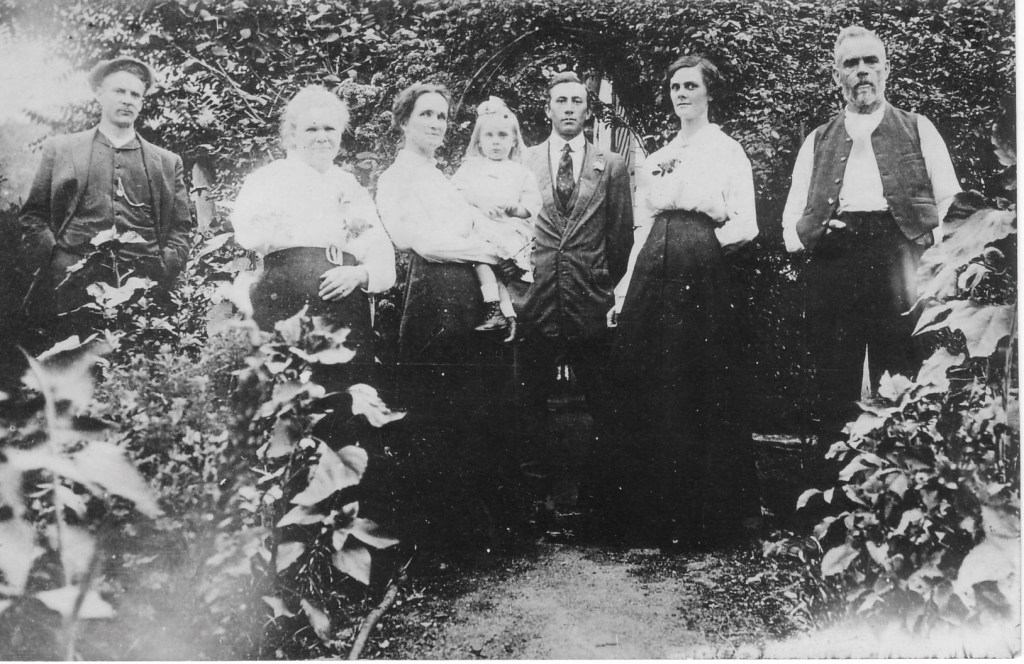
The Leake family taken in about 1915 L-R Arthur Leake, Maryann Leake (Bampton), Gertrude Leake (Jones) holding May Leake, Tom Hutchinson, Emma Hutchinson (Leake), and David Leake

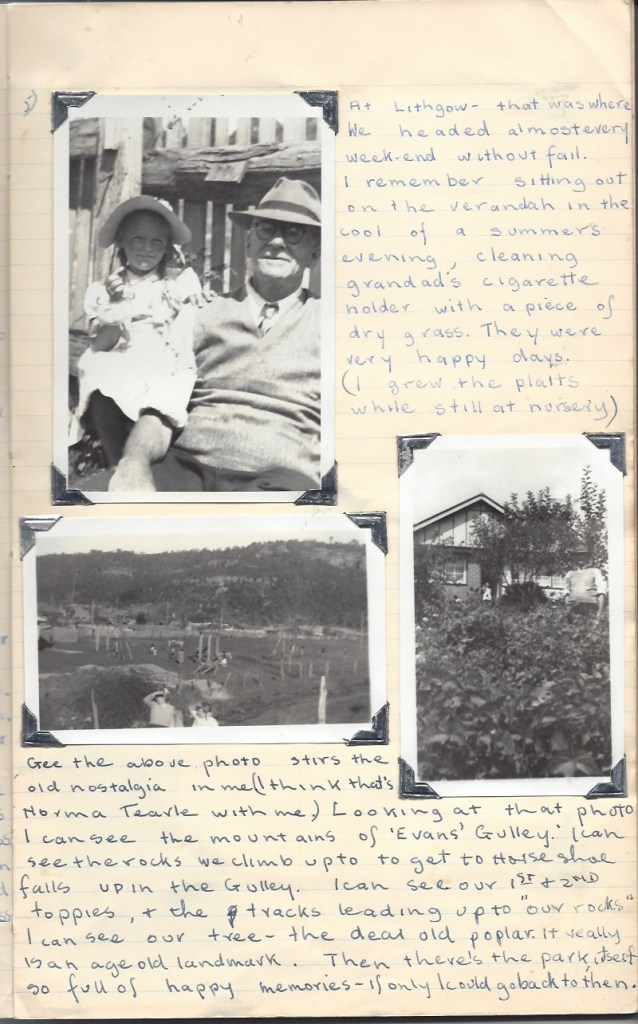
The home that David built for Mary Ann in the Vale of Clwydd, Lithgow, was a small weatherboard construction, with a large coal burning oven in the kitchen where the family spent most of their time, two bedrooms and a formal dining/reception room.  The laundry, with its coal fired copper was in a separate lime washed brick building, next to which was the outside privy.   A creek ran along the side boundary of the yard and water was originally drawn from a well sunk into the front yard. 

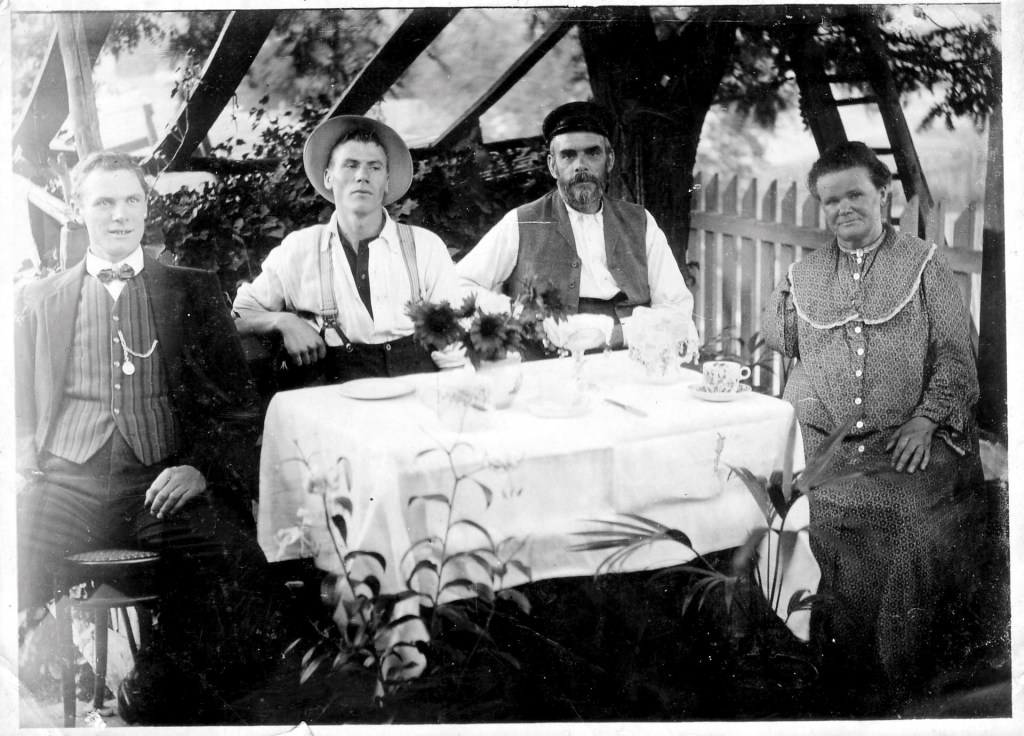
The couple must have felt nostalgic for their English landscape for they planted a poplar tree and several Hawthorne trees along the front picket fence as well as several Oak trees on the side. There are several photographs in the family album of David and Mary Ann enjoying a cup of tea while sitting beside a linen covered table, under one of the Hawthorne trees.

I think L-R: Jo Bampton, Arthur or Edwin Leake, David Leake, Maryann Leake

By that time, Mary Ann had lost her right arm. I was told as a young girl that a bottle of home made root beer (ginger beer?) exploded and cut her arm. The wound became gangrenous and her arm was amputated.  The thought of undergoing that kind of surgery back then makes my blood run cold.

Portrait taken of Maryann after she had lost her arm.

Mary Ann died during the Spanish Influenza epidemic on 23 September 1918. Her obituary, published in the Lithgow Mercury reported:

 “By the death of Mrs David Leake, which took place about midday on Monday, Lithgow has lost another very old resident, who resided in the Vale of Clwydd for over 33 years.  The deceased lady had not been in robust health for a considerable period, but although she took more seriously ill about a week ago, her end was unexpected.  The late Mrs Leake was possessed of generous and religious impulses, and was a consistent member of the Salvation Army for quite 25 years.  She was a kindly neighbour and many needy and sick will miss her attention. ….”

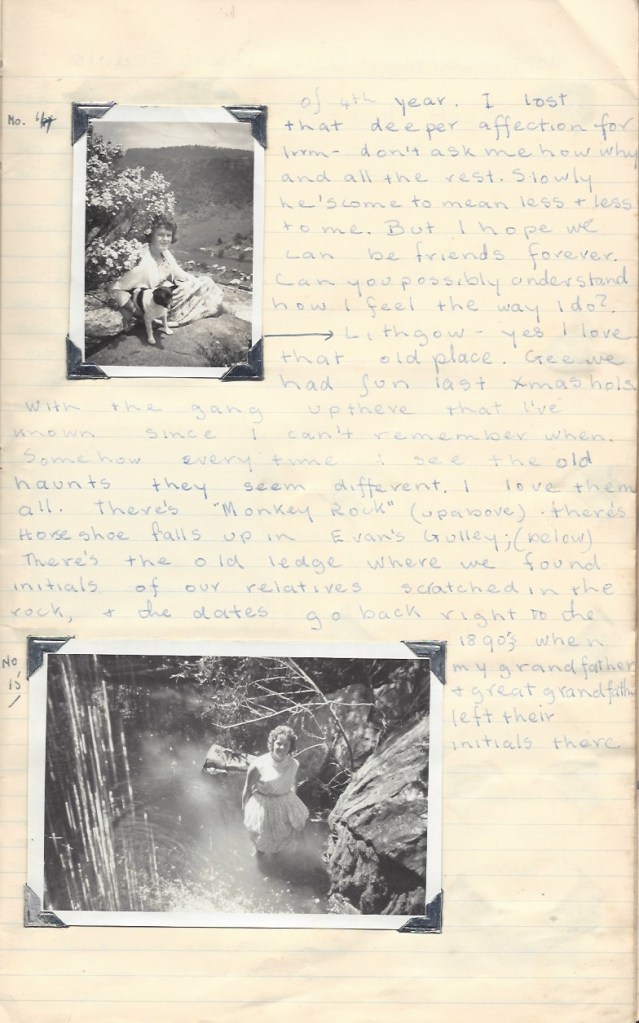
When I was young, I often stayed with my grandfather, Arthur Leake at the original family home.  Although three more rooms had been added by then, we still spent most of our time sitting in the old original kitchen, still warmed by the coal oven that Mary Ann had used. I remember being bathed in front of the oven fire in an old metal tub filled with hot water poured from the huge black cast iron kettle that seemed to be permanently bubbling away on the oven.  Another great memory is being allowed to sit on the old rocking chair in front of the fire, while toasting bread on an old fork fashioned from fencing wire.

Grandfather still used the old laundry.  It was such a lovely warm place to shelter from the frosty snowy winter days that were common in the Vale.  It was not such a great place to be in the height of the summer heat though. I am sure that washing day was a physically hard and long process for Mary Ann.  The fire would have to be lit under the copper and the water fetched by the bucket full from the well. The clothes then would need to be scrubbed on an old washboard, before being plunged into the copper. Mary Ann would next have to lift the heavy wet washing out of the copper, using a wooden prop stick, and feed them through a hand operated mangle into the old stone sink of rinsing water next to the copper then back through the mangle again before hanging them out on the line strung between two poles and raised by a long wooden prop. I am very glad to have all the modern machinery in my laundry.

Who I am

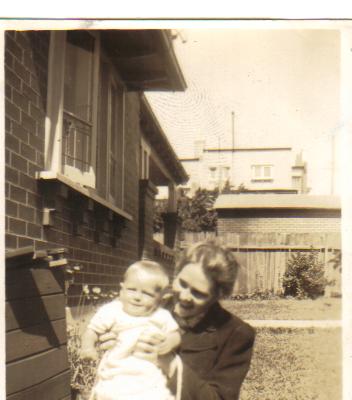
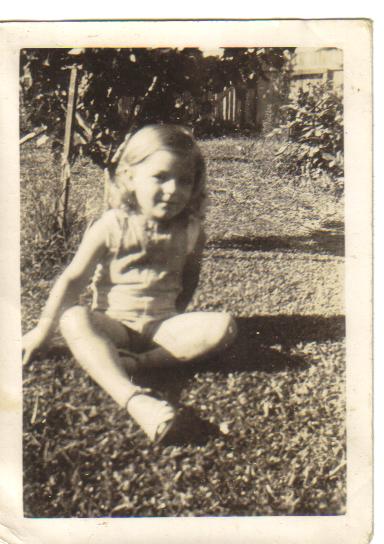
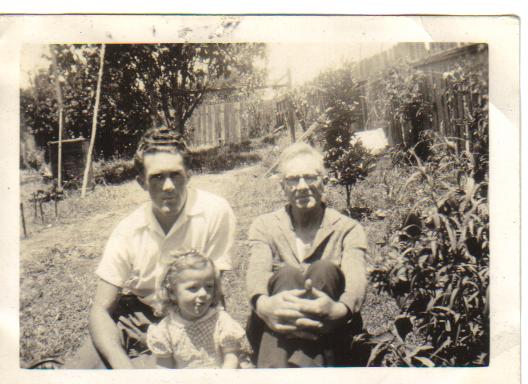
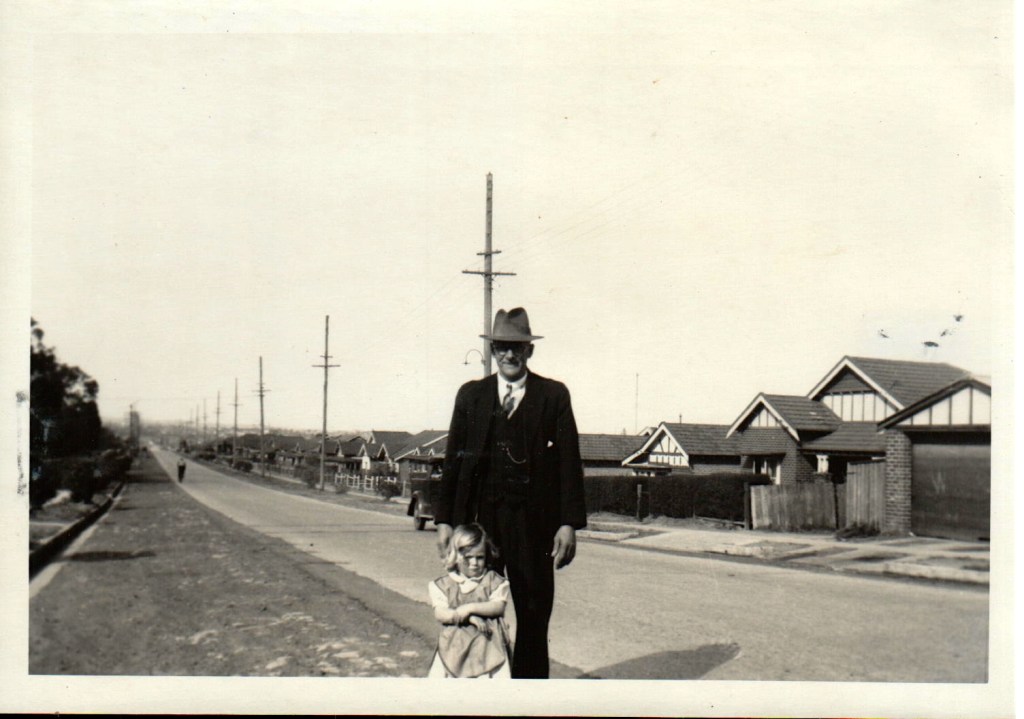
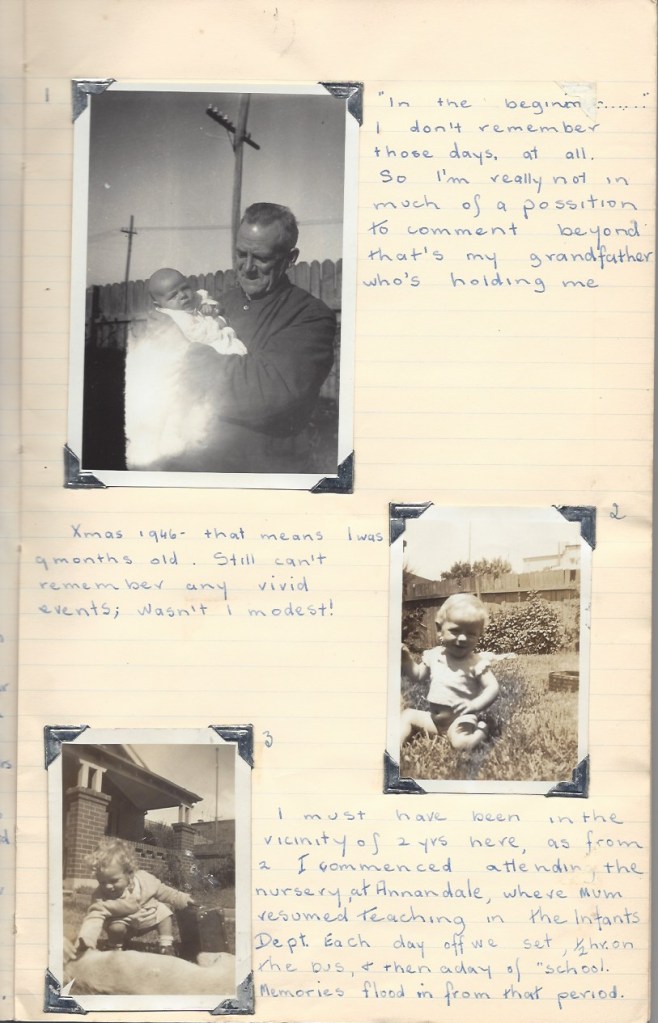
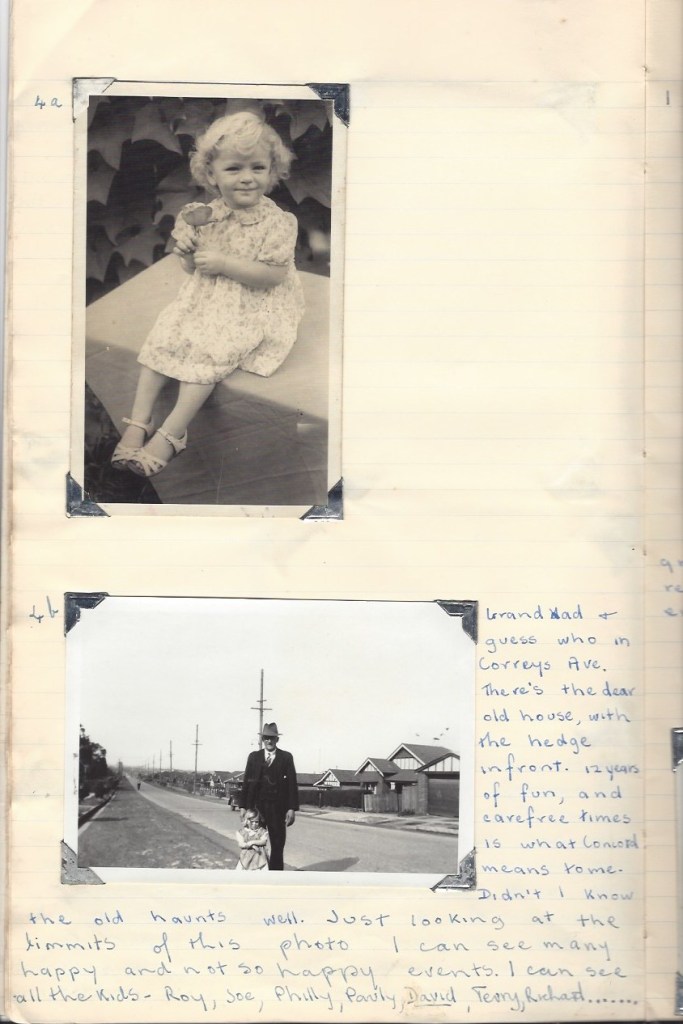
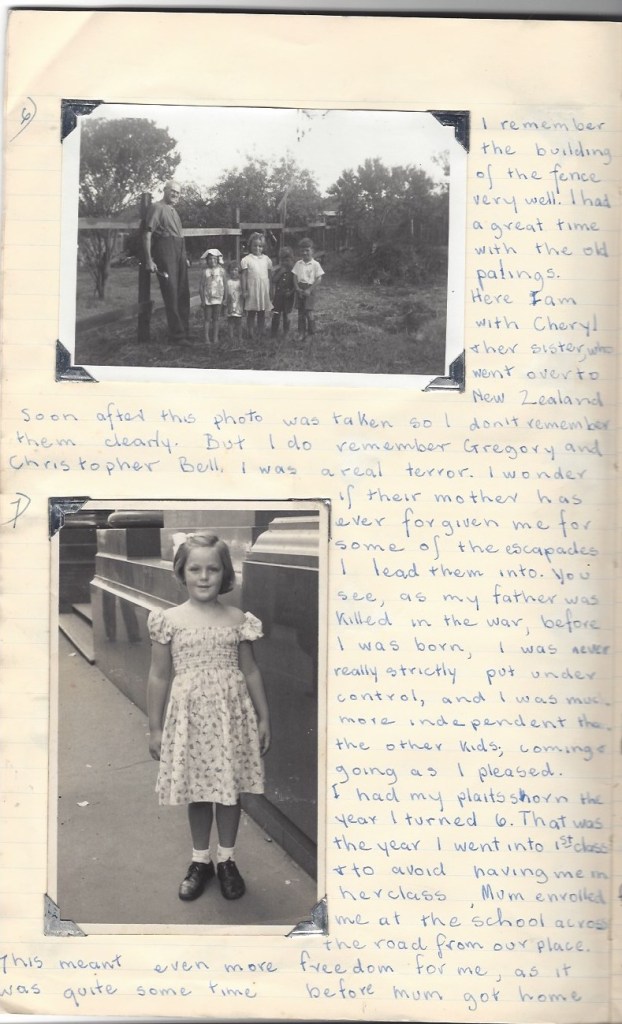
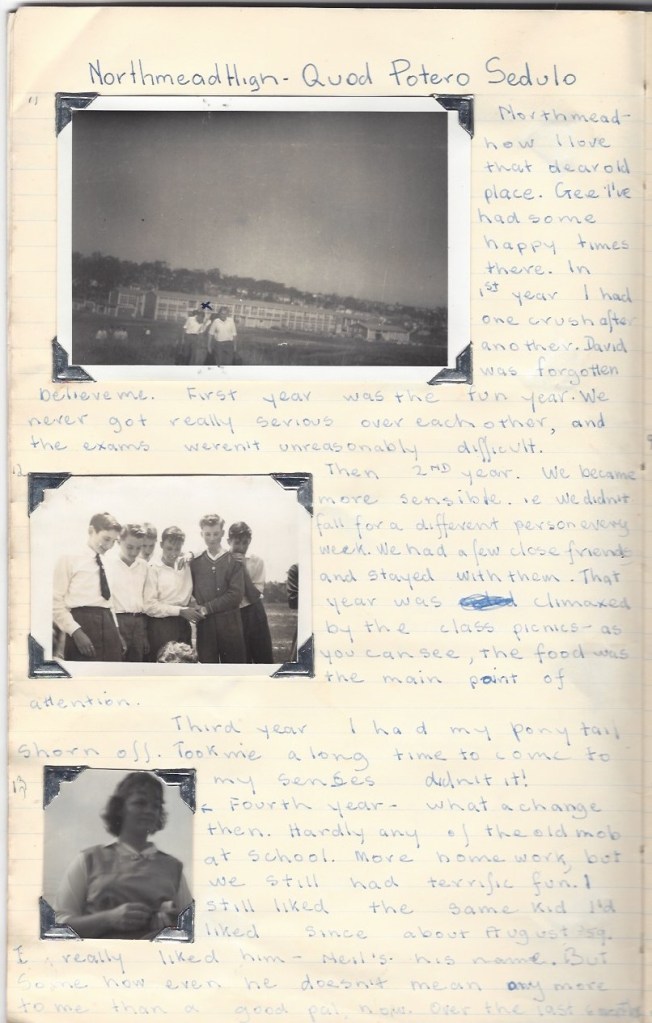
Susan Dale Aldridge, daughter of Edna Leake. I was born at the Crown Street Women’s Hospital in Darlinghurst back in 1946, and taken home to Buffalo Road in Ryde. Soon after, my mother and I moved to the place that I remember as home for my first eleven years at ‘Bullecourt’, Correy’s Avenue in Concord, Sydney. We lived there with my mother’s sister Della and younger brother, Edward (Ted).

My Grandfather, Arthur Leake and me. ‘Bullecourt’ is the first house on the right

Introduction written in December 1962

Eliza’s Journey

Great Grandmother, Eliza Jane Griffiths-Aldridge (Nee Burns)

Eliza leant against a tree beside the banks of Jack Hall’s Creek near Coonabarabran, the picture of misery and desperation.  Although she was only 40 years old, her thin, weary body looked like that of an old woman. 

“There is nobody I can turn to.  Why did Ned steal those sheep from Snowdens.  Now he is facing court and no doubt will end up in jail.  Only a month ago we buried another baby,” she mused.

Her thoughts took her back to the smallholding she grew up on in Dungannon, Ireland.  There was her older brother Robbie, working beside their father planting potatoes.  Life was not easy, the fungus had taken hold and most of the crops were rotting in the ground over winter.  As the situation worsened, many communities suffered starvation and destitution.

One day, her young man, Hugh came over to tell her that he had decided to travel to Australia as part of the Australian Government’s Assisted Immigrant Scheme.  “Don’t worry love, if it works out, I will send for you,” he assured her.

And so it happened, that in 1860, when she was only 17 years old, Eliza joined Hugh in Wollongong and they married by special license in Dapto.  A year later Isaac was born.  Over the next few years, the young couple moved first to Bathurst and then to Hartley in search of laboring jobs for Hugh. Eliza gave birth to four more babies three of whom she also buried shortly after birth. 

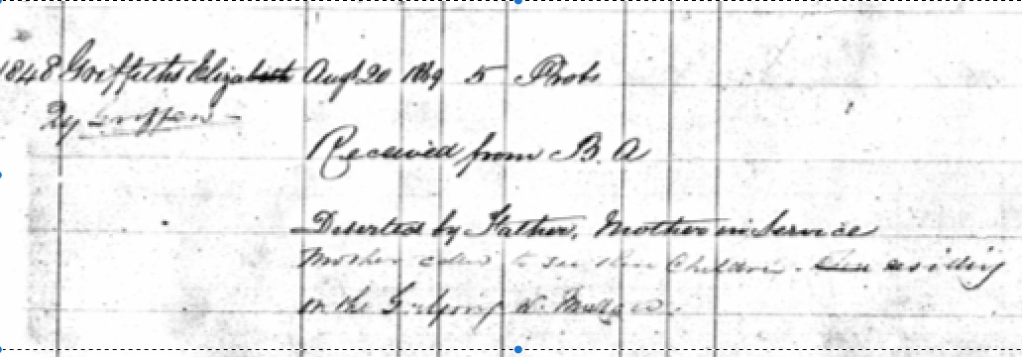
Soon after burying their son Alfred at Hartley in 1868, Hugh decided to try his luck at gold prospecting.  He left Eliza with the two young children Isaac and Elizabeth in Gulgong  and set out towards Two Mile Flat. He had heard that gold had been found there. Eliza never saw him again.  Hugh disappeared without trace, leaving his family destitute. In August 1869, Isaac and Elizabeth were given shelter by the Randwick Asylum for Destitute Children. Eliza managed to visit her children once, however she did not have the means to support them.

Men were flocking to Gulgong in search of their fortunes in gold, and Eliza saw an opportunity for herself as a Palmiest.  She became know by the locals as “The Breeze of the Winds”.  A tall dark haired, goodlooking, blue eyed larrikin of a man soon caught her eye.  In no time Edward ‘Ned’ Aldridge left his wife and family and moved in with Eliza. Life was so much fun in the beginning.  Ned had found a fortune in gold.  He and Eliza were often seen riding around the streets of town in his buggy.  Eliza was dressed in the height of fashion, and Ned took great delight in calling into the various pubs in town, shouting the bar drinks.  Rumour had it that he actually shod his horses with golden shoes.

Eliza gave birth to four more children, again losing three of them to disease.  Ned lost his fortune as quickly as he had gained it. He seemed to have an irresponsible devil-may care attitude, which made life very difficult for his family. 

One day in late November 1871 many people, including Ned were loitering about relaxing and enjoying the fine weather.  In the evening they moved towards The Star, in Queen Street. It was reported in the press the next day that  “there proceeded loud and angry words…… The altercation in words soon came to blows.  Not only fists, but bludgeons, iron bars and fire pokers, driving picks and loaded whips were freely used.  It appeared that two men, Mr Aldridge and another had some words. Mr Bindu urged Mr Aldridge to enter the hotel.  The door was then closed against the ingress of those without.  The door and windows were smashed in amidst the uproar of the crowd. “ The reporter wryly commented “The damage to the heads and bodies of the belligerents must have been considerable, but may probably be repaired at a less cost than that of the door and windows of the hotel.”

Fortunately, he was a gifted judge of horse flesh and Ned enjoyed some success racing his horses in the district. His mare, Locket came third in the prestigious 1874 New Years Handicap Race at Home Rule and he was reported to have been paid prize money of  £132  at the 1876 Gulgong Annual Races in June. In that same year, Eliza gave birth to another son, Herbert Charles, whom she called Charlie.

The following year their house was partially destroyed by fire and later two of Ned’s best racehorses “Friendless” and “Locket” were stolen. Once again Eliza was faced with poverty and despair.  She pleaded with Ned to move away and make a new start elsewhere for the sake of their family.  

Whether or not it was in response to Eliza’s pleading Ned found work managing stock on a property near Coonabarabran.  For a short time life became more settled for Eliza and her children.  However with the births of yet three more babies and the grief of burying two of them, her resilience had hit rock bottom by the time Ned was charged with the theft of the sheep.  

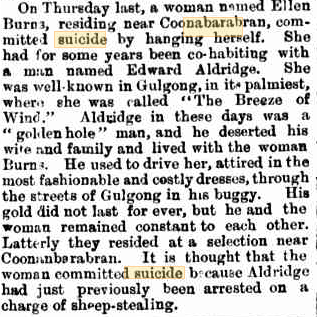
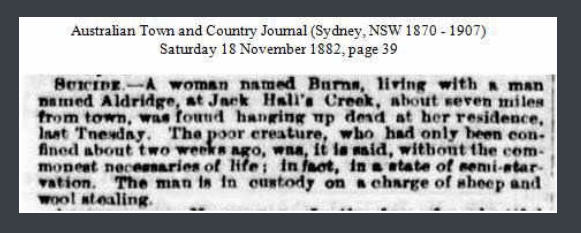
Charlie had been looking everywhere for his mother, who had been missing for many hours.   The sun was setting by the time he reached the creek. There was no sound other than the birdsong as the galahs, parrots and crows settled for the evening and the chirping crickets took over. He walked into the grove of trees beside the creek.  It was darker, cooler in there.  Suddenly something caught his eye.  He looked up and to his horror, saw his mother hanging from one of the branches.  There was a rope around her neck. She was so still. The young boy sank to the ground, feeling numb and overwhelmed by his grief.

Charlie (Herbert Charles Aldridge) was my Grandfather. His father Edward Aldridge, was Eliza Jane Burns-Grifffiths second husband

“G’day”, from Susan Dale

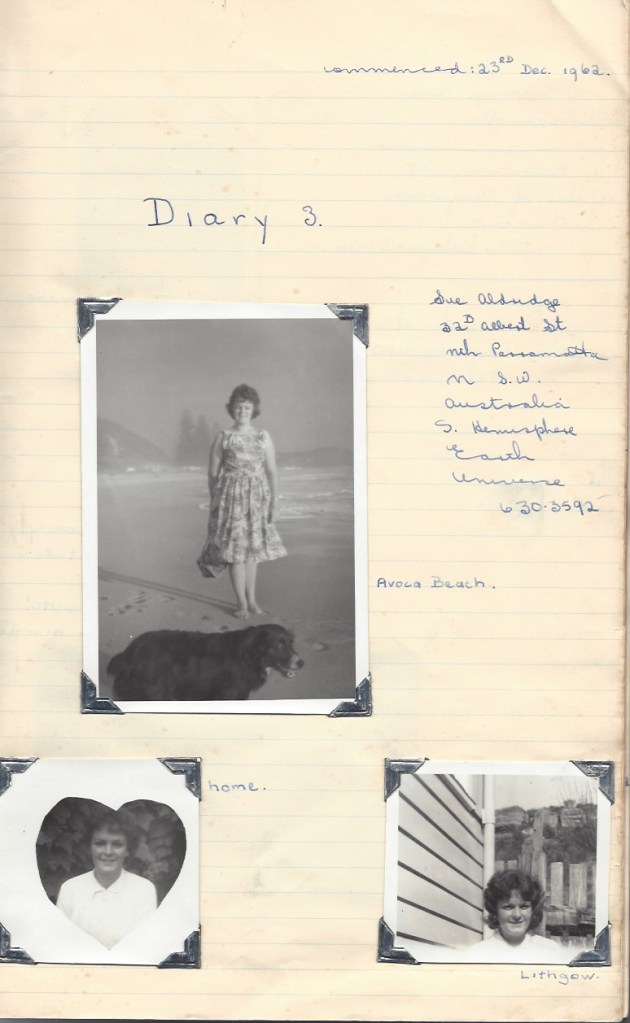
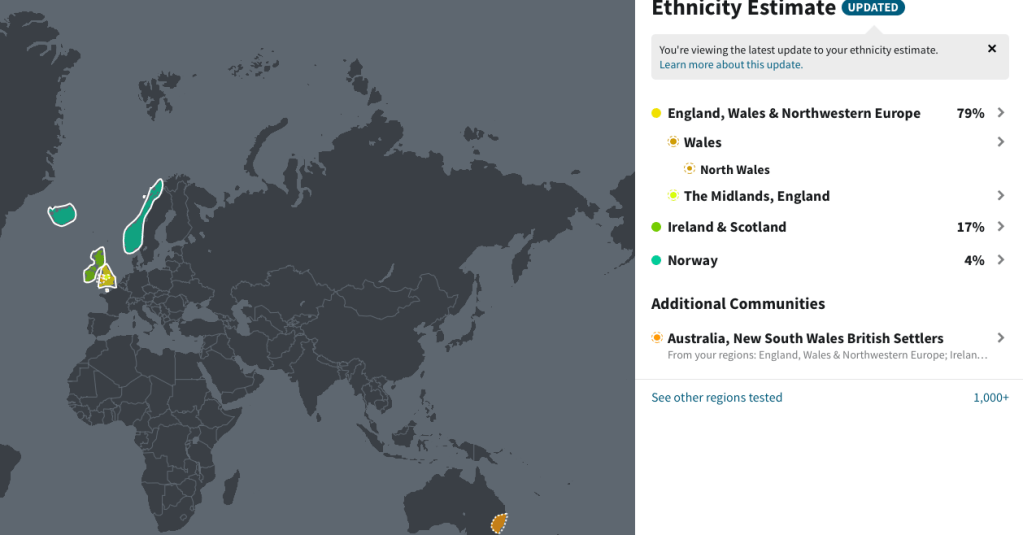
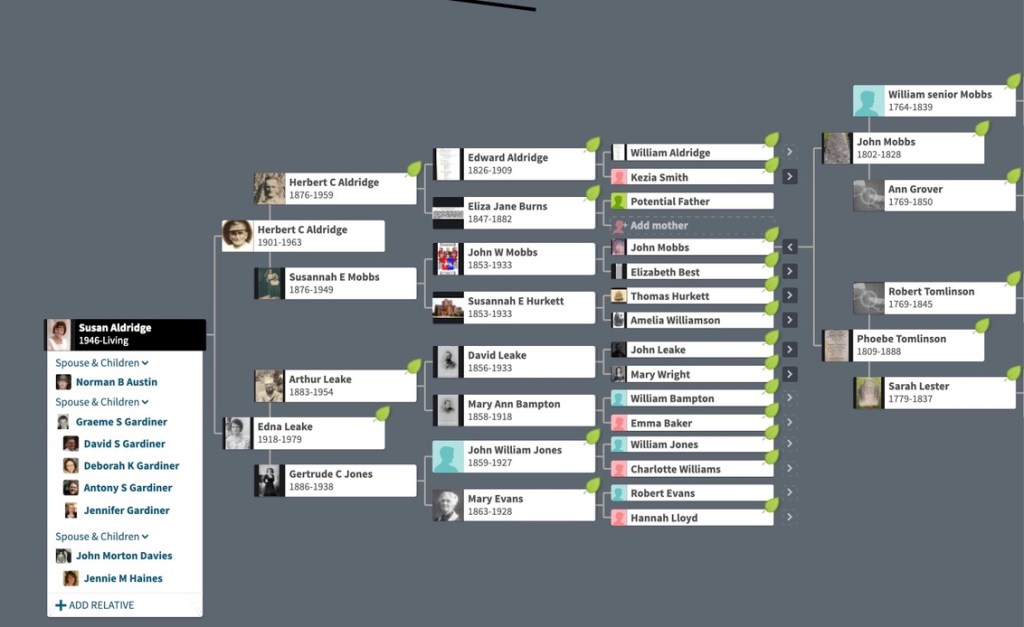
This is about MY roots. Looking back into where I came from, who made me, and where they came from, who were they, where did they live, what were their lives like and so on. The map below shows where my DNA threads come from.

Although I knew some of the story of my mother, Edna Leake’s family story, I never knew my father, Herbert Charles Aldridge. The early family myths were that he had died in ‘the’ war (WWII) prior to my birth. This I accepted as truth until it was too late to confront those who might have known the truth. There were no photos, nothing to tell me about the man who helped create me. My search for answers began in earnest in the late 1980’s following the death of my Aunt Della. My mother had passed away in 1979 and Della was the last person who could have filled in some of the gaps, but had chosen not to. I was living in Canberra and had access to the wonderful National Library of Australia. Starting with my Birth Certificate, I was able to obtain copies of both my parents’ Birth Certificates, and the journey back in time began…