Great Grandmother, Eliza Jane Griffiths-Aldridge (Nee Burns)
Eliza leant against a tree beside the banks of Jack Hall’s Creek near Coonabarabran, the picture of misery and desperation. Although she was only 40 years old, her thin, weary body looked like that of an old woman.
“There is nobody I can turn to. Why did Ned steal those sheep from Snowdens. Now he is facing court and no doubt will end up in jail. Only a month ago we buried another baby,” she mused.
Her thoughts took her back to the smallholding she grew up on in Dungannon, Ireland. There was her older brother Robbie, working beside their father planting potatoes. Life was not easy, the fungus had taken hold and most of the crops were rotting in the ground over winter. As the situation worsened, many communities suffered starvation and destitution.
One day, her young man, Hugh came over to tell her that he had decided to travel to Australia as part of the Australian Government’s Assisted Immigrant Scheme. “Don’t worry love, if it works out, I will send for you,” he assured her.
And so it happened, that in 1860, when she was only 17 years old, Eliza joined Hugh in Wollongong and they married by special license in Dapto. A year later Isaac was born. Over the next few years, the young couple moved first to Bathurst and then to Hartley in search of laboring jobs for Hugh. Eliza gave birth to four more babies three of whom she also buried shortly after birth.
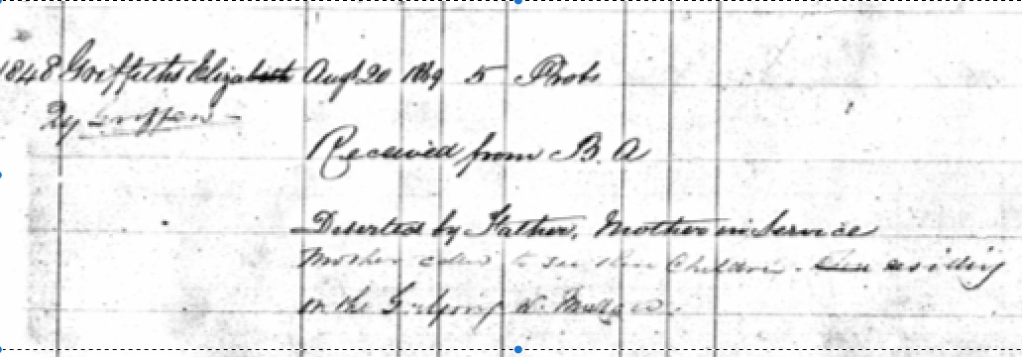
Soon after burying their son Alfred at Hartley in 1868, Hugh decided to try his luck at gold prospecting. He left Eliza with the two young children Isaac and Elizabeth in Gulgong and set out towards Two Mile Flat. He had heard that gold had been found there. Eliza never saw him again. Hugh disappeared without trace, leaving his family destitute. In August 1869, Isaac and Elizabeth were given shelter by the Randwick Asylum for Destitute Children. Eliza managed to visit her children once, however she did not have the means to support them.
Men were flocking to Gulgong in search of their fortunes in gold, and Eliza saw an opportunity for herself as a Palmiest. She became know by the locals as “The Breeze of the Winds”. A tall dark haired, goodlooking, blue eyed larrikin of a man soon caught her eye. In no time Edward ‘Ned’ Aldridge left his wife and family and moved in with Eliza. Life was so much fun in the beginning. Ned had found a fortune in gold. He and Eliza were often seen riding around the streets of town in his buggy. Eliza was dressed in the height of fashion, and Ned took great delight in calling into the various pubs in town, shouting the bar drinks. Rumour had it that he actually shod his horses with golden shoes.
Eliza gave birth to four more children, again losing three of them to disease. Ned lost his fortune as quickly as he had gained it. He seemed to have an irresponsible devil-may care attitude, which made life very difficult for his family.
One day in late November 1871 many people, including Ned were loitering about relaxing and enjoying the fine weather. In the evening they moved towards The Star, in Queen Street. It was reported in the press the next day that “there proceeded loud and angry words…… The altercation in words soon came to blows. Not only fists, but bludgeons, iron bars and fire pokers, driving picks and loaded whips were freely used. It appeared that two men, Mr Aldridge and another had some words. Mr Bindu urged Mr Aldridge to enter the hotel. The door was then closed against the ingress of those without. The door and windows were smashed in amidst the uproar of the crowd. “ The reporter wryly commented “The damage to the heads and bodies of the belligerents must have been considerable, but may probably be repaired at a less cost than that of the door and windows of the hotel.”
Fortunately, he was a gifted judge of horse flesh and Ned enjoyed some success racing his horses in the district. His mare, Locket came third in the prestigious 1874 New Years Handicap Race at Home Rule and he was reported to have been paid prize money of £132 at the 1876 Gulgong Annual Races in June. In that same year, Eliza gave birth to another son, Herbert Charles, whom she called Charlie.
The following year their house was partially destroyed by fire and later two of Ned’s best racehorses “Friendless” and “Locket” were stolen. Once again Eliza was faced with poverty and despair. She pleaded with Ned to move away and make a new start elsewhere for the sake of their family.
Whether or not it was in response to Eliza’s pleading Ned found work managing stock on a property near Coonabarabran. For a short time life became more settled for Eliza and her children. However with the births of yet three more babies and the grief of burying two of them, her resilience had hit rock bottom by the time Ned was charged with the theft of the sheep.
Charlie had been looking everywhere for his mother, who had been missing for many hours. The sun was setting by the time he reached the creek. There was no sound other than the birdsong as the galahs, parrots and crows settled for the evening and the chirping crickets took over. He walked into the grove of trees beside the creek. It was darker, cooler in there. Suddenly something caught his eye. He looked up and to his horror, saw his mother hanging from one of the branches. There was a rope around her neck. She was so still. The young boy sank to the ground, feeling numb and overwhelmed by his grief.
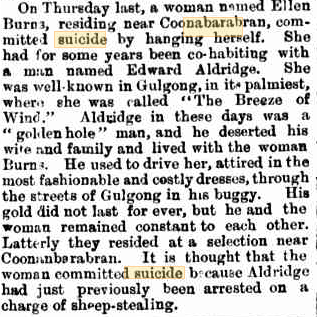
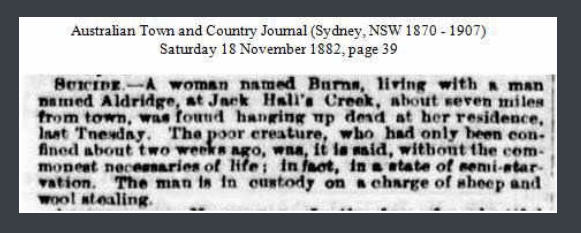
Charlie (Herbert Charles Aldridge) was my Grandfather. His father Edward Aldridge, was Eliza Jane Burns-Grifffiths second husband
 Sue's Scribbles
One thought on “Eliza’s Journey”